
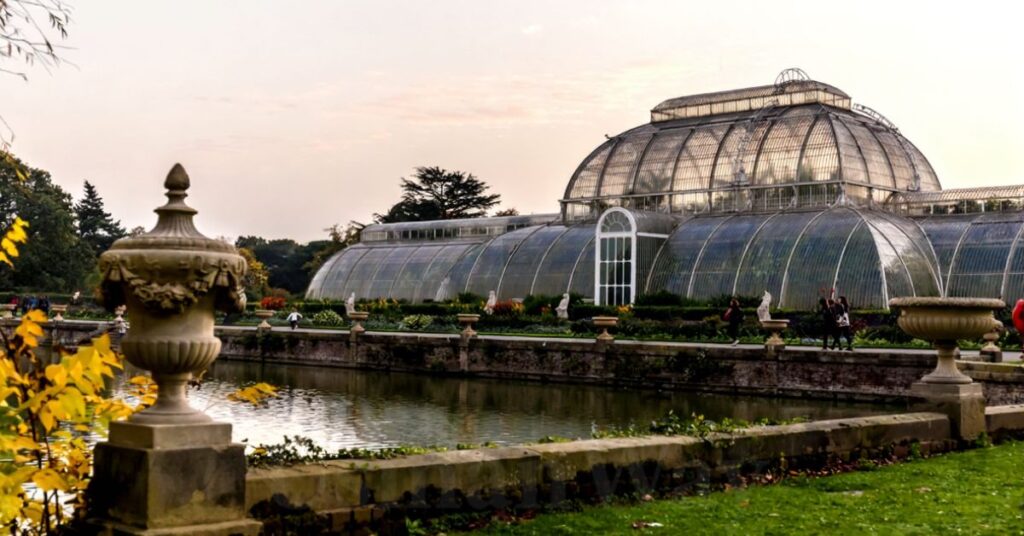
Kew Gardens, officially known as the Royal Botanic Gardens, Kew, is a UNESCO World Heritage Site in southwest London. Covering more than 300 acres, it is home to over 50,000 living plant species and is one of the world’s leading centres for plant science and conservation. Whether you love gardens, history, or photography, Kew Gardens is a fantastic day out.
The famous Palm House, Temperate House, and beautiful landscaped gardens are among its top attractions.
The easiest way to reach Kew Gardens is by train or Tube. Kew Gardens Station is just a five-minute walk from Victoria Gate and is served by the London Underground District line and the London Overground.
You can also travel to Kew Bridge Station, which is around a 10-minute walk from Elizabeth Gate, with direct South Western Railway services from London Waterloo.
Once inside, don’t miss the Palm House, the Temperate House, the Treetop Walkway, the Princess of Wales Conservatory, and the Great Pagoda. You’ll also find cafés, gift shops, walking trails, and wide open lawns that make it easy to spend a full day exploring.
The gardens are well signposted, and many paths are accessible for visitors with limited mobility.
To make the most of your visit, arrive early and wear comfortable walking shoes, as the gardens are extensive. Booking tickets online can save money and reduce waiting times.
Whether you’re visiting for the rare plants, historic glasshouses, or peaceful atmosphere, Kew Gardens is one of London’s best attractions and is well worth adding to your itinerary.
Essential Information
- Location: Kew Gardens Rd, Richmond, TW9 3AE, United Kingdom
- Opening Hours: Kew Gardens are open from 10 am to 7 pm on weekdays and 10 am to 8 pm on weekends and public holidays.
- Best Time To Visit: The best time to visit Kew Gardens is during the spring and summer months when the gardens are in full bloom. Visitors can enjoy the vibrant colours and fragrances of the various plant species. Additionally, there are special events and exhibitions held during these months, such as the Orchid Festival, the Rose Garden Festival, and the Summer Festival.
Does How to Get to Kew Gardens-The Answer
To visit Kew Gardens, plan to spend at least three to four hours exploring the highlights, but a full day allows for a more thorough experience. The time required depends on your interests, walking pace, and which specific attractions, like the glasshouses, Kew Palace, or treetop walkway, you want to visit. Getting there is easy, with options like train, tube, bus, car, and even boat rides along the River Thames.
Why should I visit Kew Gardens?
Kew Gardens offers a unique experience with its stunning exhibits, a lovely restaurant, and a shop filled with interesting items. It stretches across acres of rolling lawn, providing plenty of sights and activities to enjoy.
Located at a short distance from the nearest connecting station, it’s conveniently accessible from London, making it easy to plan your trip. Don’t miss the iconic Palm House and the many other things to see as you explore this beautiful space.
- The Palm House
- Temperate House
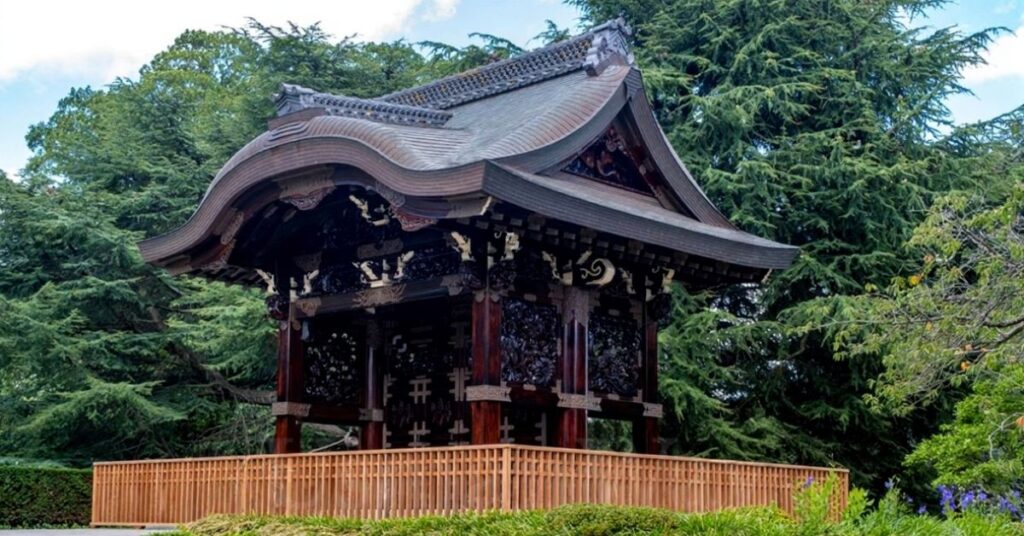
- Great Pagoda
- Treetop Walkway
- The Hive
- Children’s Garden
- Living plants
- Timing Your Visit
The Palm House
The Palm House is one of the most famous attractions at Kew Gardens and a must-visit during your trip. Opened in 1848, this beautiful Victorian glasshouse recreates the warm, humid climate of a tropical rainforest. As you walk through, you’ll discover towering palm trees, colourful tropical plants, and rare species from around the world, making it feel like you’ve stepped into a real jungle.
The Palm House is also one of the world’s oldest and most important glasshouses, home to many endangered plants used in conservation and scientific research. Climb the spiral staircase for fantastic views across the rainforest canopy and enjoy one of Kew Gardens’ most unforgettable experiences.
Temperate House
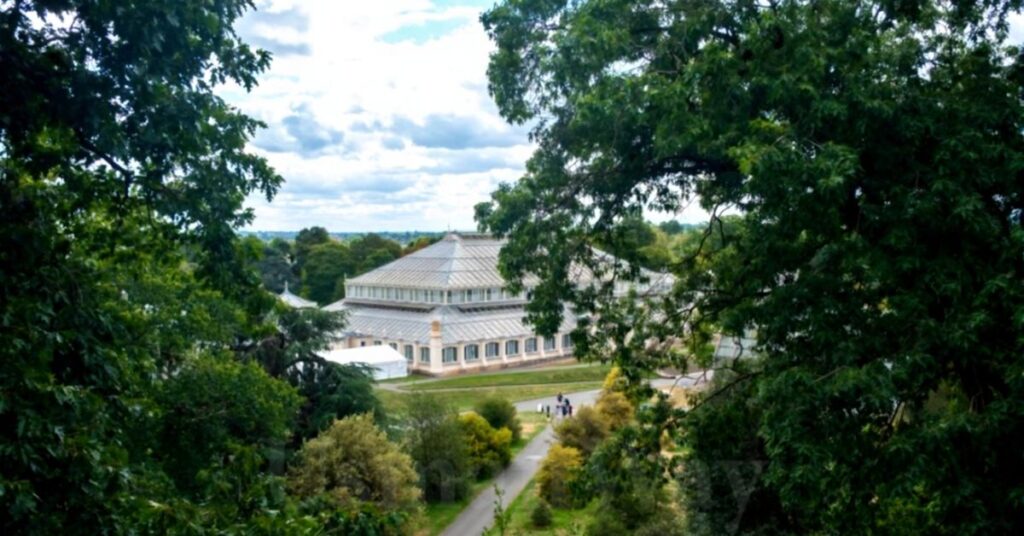
The Temperate House is one of the highlights of Kew Gardens and the world’s largest surviving Victorian glasshouse. First opened in the 19th century and beautifully restored in 2018, it is home to around 3,000 plants representing more than 1,200 species from temperate regions across Asia, Africa, Australia, the Americas, and the Pacific. Its impressive architecture has earned it the nickname “the cathedral of plants.”
Inside, you’ll discover rare and endangered plants in a bright, spacious setting designed to protect species that cannot survive freezing temperatures. The glasshouse plays an important role in Kew’s global conservation work, making it a must-visit for plant lovers, photographers, and anyone interested in nature and botanical history.
Great Pagoda
The Great Pagoda is one of the most iconic landmarks at Kew Gardens. Completed in 1762 for Princess Augusta, it was designed by Sir William Chambers after he travelled in East Asia. This striking ten-storey tower is inspired by traditional Chinese architecture and has been beautifully restored, with its famous 80 colourful dragons once again decorating the roof.
Climb to the top of the Pagoda for spectacular panoramic views across London and the surrounding gardens. Along the way, you can learn about the building’s fascinating history and its restoration. Whether you’re interested in architecture, history, or photography, the Great Pagoda is one of the highlights of any visit to Kew Gardens.
Treetop Walkway
If you have a head for heights, the Treetop Walkway at Kew Gardens is a must-see among the exhibitions London has to offer. Rising 18 metres above the ground, this tree-lined walkway gives you a rare, close-up view of forest canopies and birdlife, alongside wood sculptures that reveal how the trees have grown over time.
The Hive
The Hive is one of the most unique attractions at Kew Gardens. Standing 17 metres tall in the middle of a wildflower meadow, this striking aluminium installation was designed by artist Wolfgang Buttress to recreate the experience of being inside a real beehive. As you walk inside, more than 1,000 LED lights glow in response to the activity of real bees living in a nearby hive, creating a fascinating blend of art, science, and nature.
The immersive experience is made even more memorable by a soundscape that changes with the bees’ movements, allowing visitors to hear and see the hidden world of pollinators. Created for the 2015 Milan Expo, The Hive is now one of Kew Gardens’ most photographed landmarks and highlights the important role bees play in protecting our environment.
Children’s Garden
The Children’s Garden is a natural play space for children aged two to 12, with more than 40 tennis courts in size. They’ll love exploring the four-metre high canopy walk, trampolines, and slides, where they can run free while you take a break from plant-spotting. Quiet sessions are also available during busier periods.
Living plants
Kew Gardens is a gorgeous place, open year-round, dedicated to preserving the natural world and protecting vital plant life. It features an arboretum with rare and ancient trees, plus a wildflower meadow near the Hive.
Timing Your Visit
Kew Gardens is open from 10 am to 5 pm every day, with the last entry at 5 pm. The shops close between 4:30 pm and 5 pm, while cafés and restaurants follow the same schedule, except the Victoria Plaza Café, which closes at 5:45 pm. Always check the websites before you travel, as hours may change.
Where is Kew Gardens?
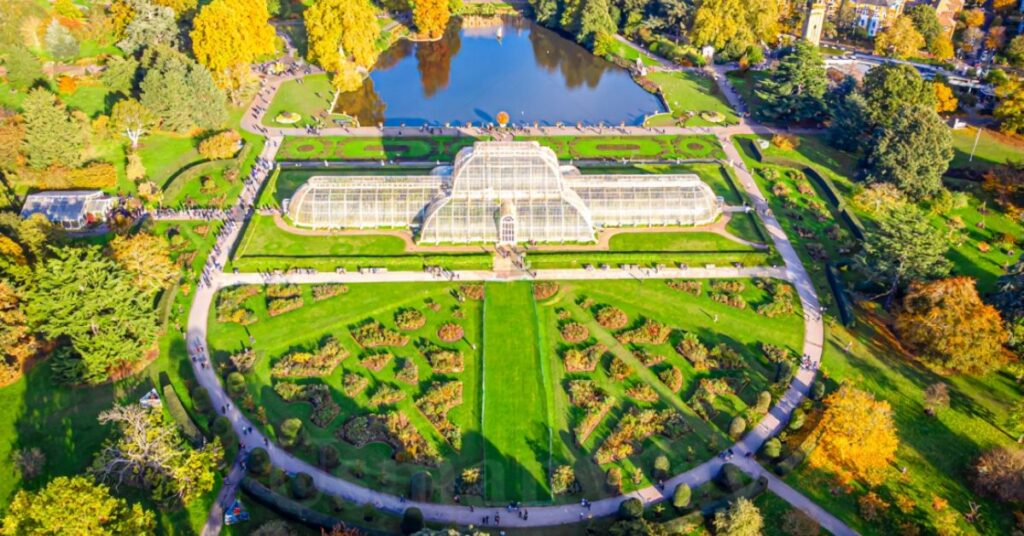
Kew Gardens is located southwest of London, about 10 miles out, in the leafy borough of Richmond upon Thames. It sits near the River Thames, with an area that wraps around a loop of the river. Hammersmith is to the east, while Richmond Park is to the south. You can easily access Kew Gardens from several gates scattered throughout the area.
For those wondering about public transport, Kew Gardens has its own tube station on the District Line, while the London Overground also stops here, linking the Gardens to the east of London. Richmond tube station is a 15-minute walk south, and Kew Gardens train station is an easy 10-minute walk from the Victoria Gate entrance.
How To Reach Kew Gardens
By Bike
Cycling to Kew Gardens is a great option for those who enjoy a leisurely ride. There are bike racks near the Victoria Gate entrance, where you can safely park your bike.
You can plan your route using a bike map, which will guide you through scenic routes along the River Thames and through Richmond Park. It’s a wonderful way to enjoy the sights while getting to Kew!
By Bus
Several bus routes connect to Kew Gardens, including the 65, 391, and 237. These buses stop near the Lion Gate and Victoria Gate entrances.
You can also use the Kew Gardens Explorer Bus, a hop-on, hop-off bus service that runs from Richmond Station and stops at various points within the Gardens. This makes it an easy and convenient way to get to Kew!
By Train
To reach Kew Gardens, you can take a train to Kew Gardens station, which is on the District Line of the London Underground. It is well-connected with trains from central London and other parts of the city.
From Kew Gardens station, it’s a short walk to the Victoria Gate entrance. Alternatively, you can take a South Western Railway train to Kew Bridge station, and then enjoy a 15-minute walk to the Elizabeth Gate entrance.
By Tube
The nearest tube station to Kew Gardens is Kew Gardens station on the District Line. From there, it’s a short walk to the Victoria Gate entrance. Alternatively, you can take the Piccadilly Line to South Ealing or Northfields stations and then transfer to the 65 bus to reach Kew Gardens. This makes it easy to get there by public transport!
By Car
You can reach Kew Gardens by car. The entrance to the car park is on Kew Road, near the Elizabeth Gate entrance. It is recommended to book your parking space in advance to avoid disappointment. However, keep in mind that London traffic can be congested, especially during peak hours, so be sure to allow extra time for your journey.
By Boat
You can reach Kew Gardens by boat along the River Thames. The riverboat service runs from Westminster, Richmond, and Hampton Court, with stops at Kew Pier. From there, it’s just a short walk to the Victoria Gate entrance. This offers a scenic and relaxing way to visit Kew Gardens!
FAQ
What tube line goes to Kew Gardens?
To get to Kew Gardens, take the District Line (Richmond branch), which stops at Kew Gardens station, located about 500m from the Victoria Gate. The station is in Zone 3 and is also served by the Mildmay Line. It’s a quick and easy way to reach Kew Gardens using public transport!
How do I get to Kew Gardens by public transport from London?
To get to Kew Gardens from central London, you can take a train, which takes about 30 minutes. For a direct route, you can board a South Western Railway train from London Waterloo to Kew Bridge. If you’re looking for the fastest train option, it’s best to hop on at Clapham Junction, which will get you to Kew Gardens quickly.
Are there any coach trips to Kew Gardens?
If you’re keen to explore Kew Gardens, there are coach trips available that take you directly to this great destination. You can enjoy the themed gardens, treetop walkway, and glasshouses at the Royal Botanic Gardens, Kew. Prices for coach trips start from £39 for Windsor and £61 for Kew Gardens, per adult, with prices dependent on the pick-up point. It’s a convenient way to escape the hustle and bustle and enjoy a peaceful day in nature.
How much time do you need at Kew Gardens?
You should plan to spend at least three to four hours at Kew Gardens to see the main highlights, but if you want to explore more thoroughly, you could easily spend a whole day or more. The total time you need depends on your interests, walking pace, and how many specific attractions, like the glasshouses, Kew Palace, or the treetop walkway, you want to visit.