
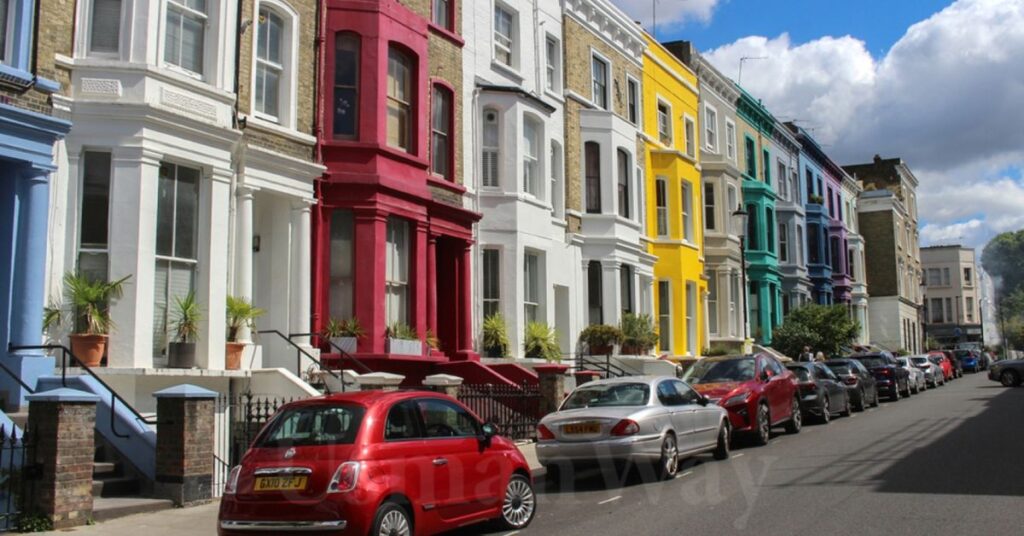
Notting Hill is one of London’s most famous neighbourhoods, known for its colourful houses, charming streets, and the lively Portobello Road Market. It also became world-famous through the film Notting Hill.
While the main streets can be busy with visitors, the area has many quieter corners where you can enjoy its beautiful pastel homes, Victorian architecture, and relaxed atmosphere.
To see the best colourful houses, explore hidden streets like Lancaster Road, Hillgate Place, St Luke’s Mews, and Elgin Crescent. These peaceful roads are perfect for photography and offer a glimpse of Notting Hill’s creative character away from the crowds. Remember that these are private homes, so enjoy them respectfully while discovering one of London’s most picturesque neighbourhoods.
Does Notting Hill’s Colourful Houses- The Short Answer
Notting Hill is famous for its colourful houses and Portobello Road Market, but beyond the crowds and Instagram hype, it offers quieter streets, local charm, and hidden gems. Exploring respectfully reveals its creative, bohemian spirit—while overtourism now impacts residents, even leading some to paint their homes black to deter crowds.
Top Streets Notting Hill’s Colourful Houses Exploring
- Notting Hill is home to some of London’s most colourful streets, each with its own unique charm. Start at Portobello Road, where colourful shopfronts and painted houses sit alongside the famous market. For a quieter visit, explore the street on non-market days. Just a short walk away, Lancaster Road is one of the brightest streets in the area, with bold purple, blue, green, and yellow houses that make it a favourite for photographers.
- For a peaceful stroll, visit St. Luke’s Mews, a charming cobbled street known for its pastel homes and its appearance in Love Actually. Elgin Crescent offers elegant Victorian houses with soft pastel colours and beautiful blossom trees in spring. You can also explore the quiet streets of Hillgate Village, including Hillgate Place, Uxbridge Street, and Farm Place, where rows of colourful houses create one of Notting Hill’s prettiest hidden corners. Remember that these are private homes, so admire them respectfully as you explore.
Visitor Tips
- When visiting Notting Hill’s colourful streets, remember that the houses are private homes. Please stay off doorsteps, avoid blocking entrances, and keep noise to a minimum so residents can enjoy their neighbourhood. For a quieter experience and better photos, visit early in the morning or around sunset when the streets are less crowded. The closest Underground stations are Notting Hill Gate and Ladbroke Grove.
- In recent years, Notting Hill has faced growing overtourism, with large crowds and social media photoshoots affecting daily life for residents. Some homeowners have even painted their famous colourful houses black to discourage influencers and tourists from gathering outside their properties. By visiting respectfully and treating the area like a residential neighbourhood, you can help protect the charm of this iconic part of London.
Start with the colourful streets of Notting Hill
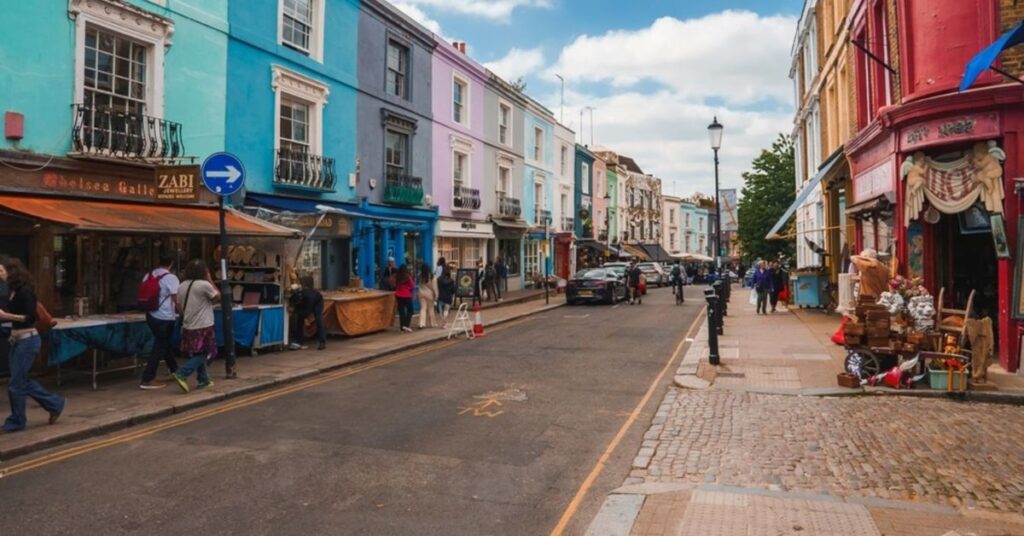
When visiting Notting Hill, the colourful streets are hard to miss. Instagram-famous, these pastel townhouses line up beautifully across the neighbourhood, offering some of the most photogenic spots in all of London. While London attractions often spark debates like National Gallery vs British Museum, Notting Hill offers a completely different kind of cultural experience through its vibrant streets and architecture.
Start your walk on Lancaster Road, one of Notting Hill’s most colourful streets. The northern end is famous for its bright purple, blue, green, and yellow houses, making it one of the best places for photos. From there, head to the quiet streets of Hillgate Village, including Hillgate Place, Uxbridge Street, and Farm Place. These peaceful roads are lined with beautiful pastel houses and offer a more relaxed, local atmosphere away from the busy crowds.
Continue your walk through Denbigh Terrace, Westbourne Park Road, and Elgin Crescent, where elegant Victorian homes are painted in soft pastel shades. These colourful houses have become a symbol of Notting Hill and reflect the neighbourhood’s creative history. Many of the bright colours appeared during the 1960s and later, as artists and residents transformed the area into the vibrant community it is today.
Notting Hill Colourful Houses: Why They’re Turning Black!
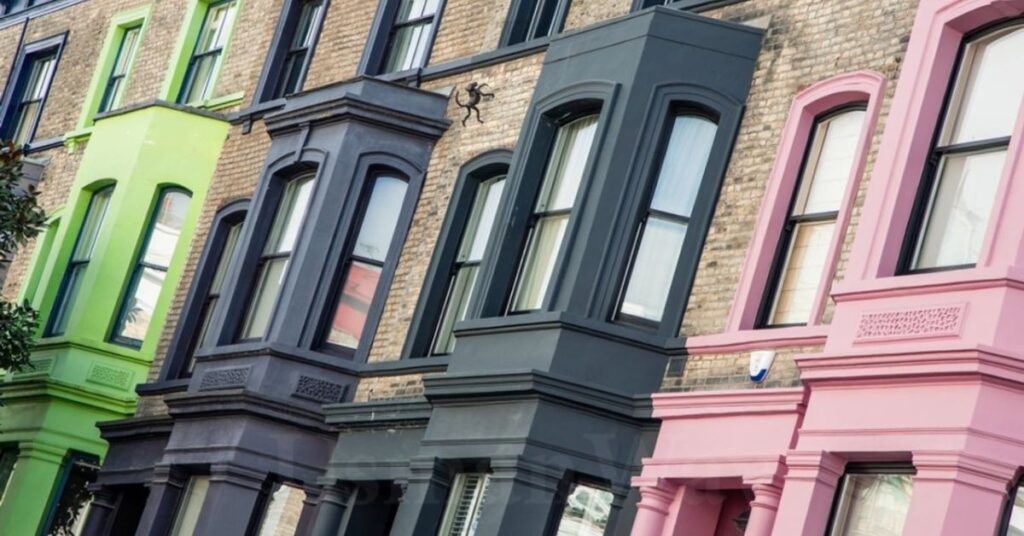
Notting Hill’s colourful houses are famous around the world, especially on streets like Lancaster Road and in Hillgate Village. Every day, large numbers of tourists and social media influencers visit these residential streets to take photos. While the colourful homes are beautiful, the growing crowds have caused problems for residents, including noise, litter, blocked doorways, and people stepping onto private property for photos.
To protect their privacy, some homeowners have started painting their bright houses black, hoping the darker colour will be less attractive for social media photos. A few residents have also encouraged their neighbours to do the same. Although these changes may reduce attention, many locals believe that managing overtourism will take more than just a new paint colour. Visitors can help by respecting private homes and enjoying the neighbourhood responsibly.
Explore Portobello Road market.
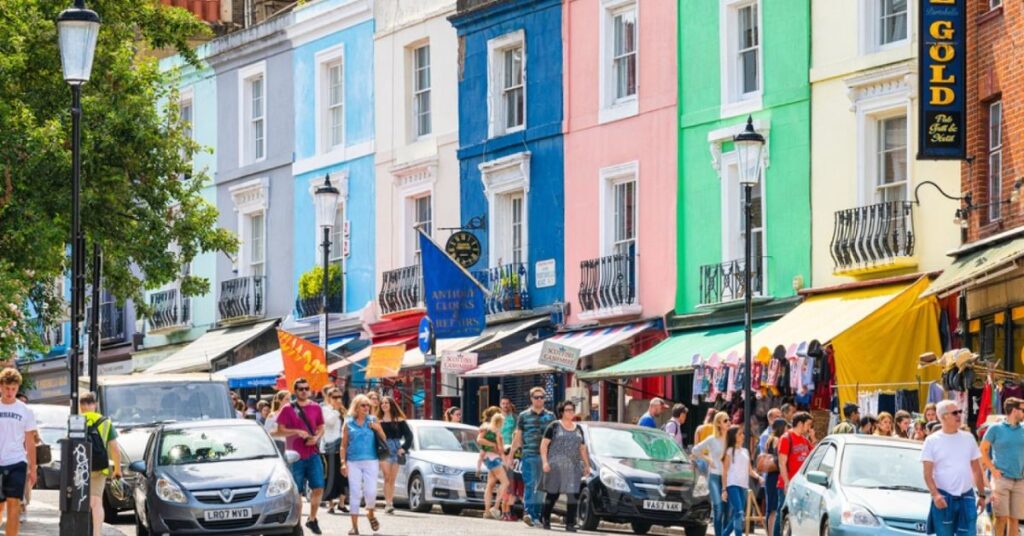
Portobello Road Market is one of the best places to visit in Notting Hill. The market is famous for its antiques, vintage clothing, street food, fresh produce, and unique independent shops. Friday is a great day to browse antique stalls, while Saturday is the busiest day when the full market comes alive. If you prefer a quieter visit, come on a weekday or arrive early in the morning to explore before the crowds.
Even when the market is quieter, Portobello Road is full of charm with colourful shopfronts, cosy cafés, and boutique stores. Take time to wander down the nearby side streets and cobbled mews, where you’ll find some of Notting Hill’s famous pastel houses and hidden corners. If your main goal is to photograph the colourful homes, visit on a non-market day or around sunset for a more peaceful experience and beautiful light.
St Luke’s Mews
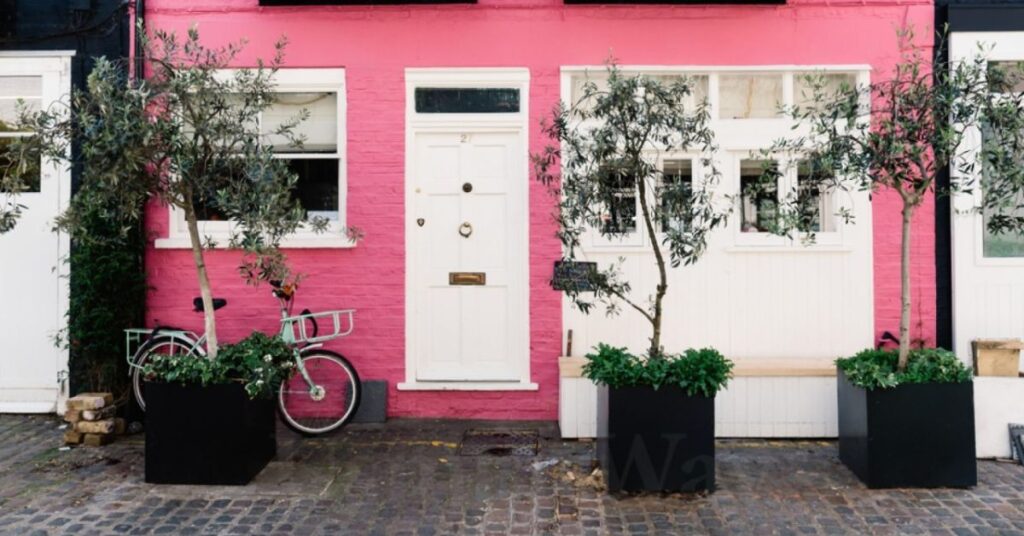
St Luke’s Mews is one of the prettiest streets in Notting Hill. This quiet cobbled lane is lined with colourful houses, including the famous pink home featured in the film Love Actually. Once used as stables for horses, the mews has been transformed into beautiful homes and is now one of the most photographed streets in London.
Today, St Luke’s Mews is a peaceful place to enjoy a walk, admire the charming architecture, and take photos of its pastel-coloured houses. As it is a private residential street, visitors should be respectful by keeping noise low and avoiding doorsteps or entrances. If you want the best experience, visit early in the morning when the street is at its quietest.
Lancaster Road
Lancaster Road is one of the brightest and most colourful streets in Notting Hill. Located near the junction with Portobello Road, it is famous for its bold rows of purple, blue, green, yellow, and pink houses. The vibrant colours make it one of the most photographed streets in London and a favourite stop for visitors exploring the neighbourhood.
As you walk along Lancaster Road, you’ll notice that one side of the street features bright, eye-catching colours, while the opposite side has softer pastel homes. Since the road is open to traffic and buses, take care when stopping for photos. For the best experience, visit early in the morning or on a weekday when the street is quieter and easier to enjoy.
Colville Terrace
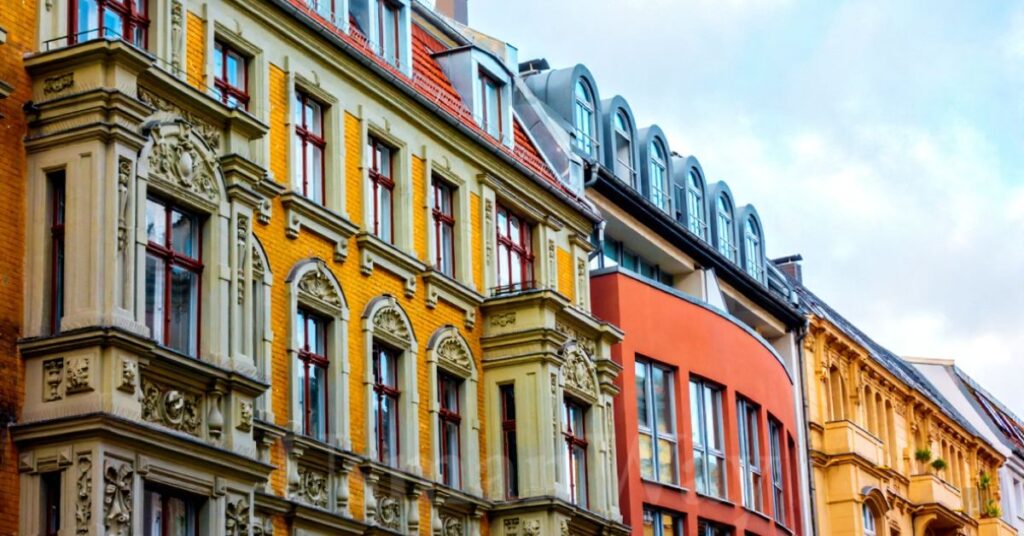
Colville Terrace is a lovely street just a short walk from Portobello Road. It is known for its elegant Victorian houses painted in soft blues, reds, lavender, and pastel shades, making it one of Notting Hill’s hidden gems. As you continue towards Ledbury Road, the colourful homes and peaceful atmosphere make this a great place for a relaxing walk and beautiful photos.
After exploring the street, take a break at Ottolenghi Notting Hill, famous for its delicious pastries, cakes, and coffee. If you’re looking for a hearty breakfast or brunch, Granger and Co. Notting Hill is another popular choice nearby. Both are just a few minutes’ walk away and are perfect places to relax after discovering Notting Hill’s colourful streets.
Elgin Crescent
Elgin Crescent is one of the most beautiful streets in Notting Hill. Lined with elegant Victorian houses painted in soft pastel colours, it stretches from Portobello Road to Clarendon Road. Built in the 1850s and 1860s, the street is known for its historic charm, colourful homes, and peaceful atmosphere, making it a favourite spot for photographers and visitors exploring the neighbourhood.
After admiring the colourful houses, stop by Trailer Happiness on the corner of Elgin Crescent and Portobello Road. This popular tiki-style bar is well known for its creative cocktails and relaxed atmosphere, making it a great place to unwind after a day of exploring Notting Hill’s colourful streets.
Cute shops in Notting Hill
Notting Hill is full of charming independent shops that make exploring the neighbourhood even more enjoyable. As you wander along Portobello Road and the surrounding streets, you’ll discover vintage boutiques, homeware stores, bookshops, antique dealers, and unique gift shops. Popular stops include Alice’s for quirky vintage finds, The Cloth House for beautiful fabrics, and Couverture & The Garbstore for stylish fashion and home accessories.
If you’re looking for a souvenir or something special for your home, browse the print shops, antique stores, and colourful boutiques scattered throughout the area. You can also visit The Blue Door for its block-print clothing and home décor, or take a break at one of the many cosy cafés nearby. Whether you’re shopping or simply window browsing, Notting Hill’s independent stores add even more charm to this colourful London neighbourhood.
Charming bookshops in Notting Hill
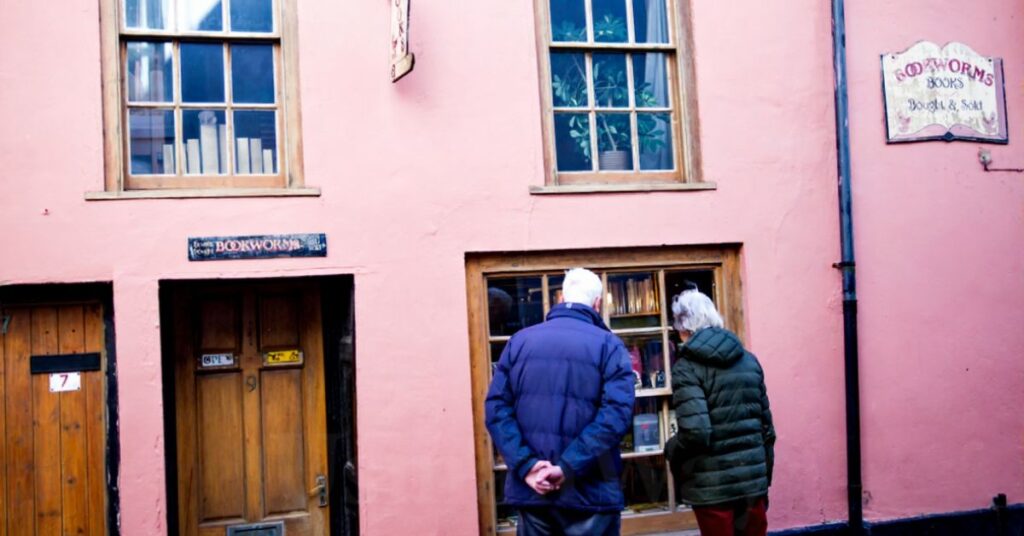
Book lovers will feel right at home in Notting Hill. Visit Books for Cooks, a famous cookbook shop with thousands of cookbooks from around the world. The shop also has a small test kitchen where recipes from the books are prepared, making it a favourite stop for food lovers. Just a short walk away is The Notting Hill Bookshop on Blenheim Crescent, a charming independent bookshop made famous by the film Notting Hill.
For even more great reads, stop by Daunt Books Notting Hill, a beautiful independent bookshop known for its carefully chosen collection of fiction, travel, and non-fiction books. Whether you’re searching for a new bestseller, a cookbook, or a unique souvenir, Notting Hill’s cosy bookshops are well worth adding to your walking itinerary.
Indulge at Local Bakeries

Notting Hill is home to some of London’s best artisan bakeries, making it the perfect place to stop for coffee and a sweet treat. Start at Layla Bakery, famous for its freshly baked sourdough, flaky pastries, and buttery croissants. Arrive early, as many of its most popular pastries sell out before lunchtime. Another local favourite is Buns From Home, where you’ll find giant cinnamon buns and other delicious pastries that are perfect for breakfast or an afternoon snack.
For something a little different, visit Moi et Toi for beautifully made French-inspired pastries and speciality coffee. Whether you’re craving a flaky croissant, a sweet bun, or a fresh loaf of bread, Notting Hill’s cosy bakeries are the perfect place to relax after exploring the neighbourhood’s colourful streets and hidden corners.
Visit the Cosmic House
If you love architecture and design, don’t miss a visit to the Cosmic House in Notting Hill. Designed by architect Charles Jencks, this remarkable home is one of London’s finest examples of Postmodern architecture. From the outside, it looks like an ordinary Victorian house, but inside you’ll find imaginative rooms filled with colourful designs, hidden details, and fascinating cosmic themes that make every space unique.
The Cosmic House is open to visitors on selected days, and tickets are released in limited numbers, so they often sell out quickly. It’s a good idea to join the Jencks Foundation mailing list and book as soon as new tickets become available. Along with the beautifully preserved interiors, visitors can also enjoy temporary exhibitions and artworks, making this one of Notting Hill’s most unique cultural attractions.
Catch a Film at Electric Cinema
The Electric Cinema is one of Notting Hill’s most iconic attractions and one of the oldest working cinemas in the UK. First opened in 1910, this historic cinema has been beautifully restored while keeping its original charm. Inside, you’ll find comfortable leather armchairs, cosy sofas, and a stylish bar, creating a unique movie experience unlike a regular cinema.
Watching a film at the Electric Cinema is the perfect way to relax after exploring Portobello Road and Notting Hill’s colourful streets. You can enjoy the latest films in a cosy setting while sipping a drink or enjoying snacks delivered to your seat. Whether you’re a film lover or simply looking for a memorable evening in London, the Electric Cinema is well worth adding to your itinerary.
Shop the Boutiques on Westbourne Grove
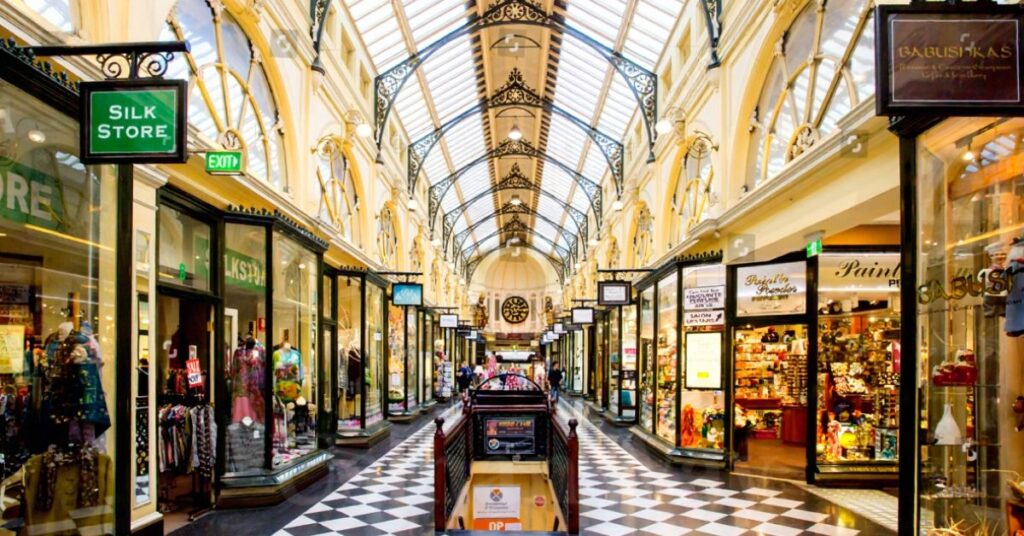
Westbourne Grove is one of the best places to shop in Notting Hill. This stylish street is lined with designer boutiques, independent stores, cafés, and homeware shops, offering a quieter and more relaxed experience than nearby Portobello Road. Be sure to stop by Wild at Heart, the famous flower shop, and browse stores like Sézane L’Appartement London for Parisian fashion and Daylesford Organic – Notting Hill for organic food, coffee, and gourmet treats.
After shopping, relax at one of the area’s popular cafés or bakeries before continuing your walk through Notting Hill. Whether you’re looking for fashion, fresh flowers, delicious food, or unique gifts, Westbourne Grove offers a perfect mix of luxury shopping and local charm, making it one of London’s most enjoyable shopping streets.
Have lunch at Six Portland Road, or dine at another Notting Hill restaurant.
For a memorable meal in Notting Hill, try Six Portland Road. This cosy neighbourhood restaurant is loved for its relaxed atmosphere, friendly service, and seasonal British menu that changes regularly. Fresh ingredients, homemade soda bread, and carefully prepared dishes make every visit feel special, whether you’re stopping by for lunch or dinner.
Notting Hill also has plenty of excellent places to eat. Enjoy Mediterranean-inspired dishes at Wild Restaurant, deep-dish pizza at Ria’s, or a fresh Australian-style brunch at. Whether you’re looking for a casual lunch, a relaxed brunch, or a special dinner, Notting Hill offers great restaurants to suit every taste.
FAQ
Where are the colourful houses in Notting Hill?
The colourful houses in Notting Hill can be found on streets like Lancaster Road, known for its bold colours, and Elgin Crescent, with vibrant, pastel-colored houses. Other streets, such as Colville Terrace, St. Luke’s Mews, and Denbigh Terrace, also feature beautiful, colourful homes that add to the area’s charm.
What is the most Instagrammable street in Notting Hill?
The most Instagrammable street in Notting Hill is Lancaster Road, famous for its bold, vibrant houses, especially at the northern end. Known for its iconic pastel townhouses, this street is a top spot for photogenic photos and is Instagram-famous for a good reason.
Why is Portobello Road so famous?
Portobello Road is famous for its vibrant market, offering a superb selection of everything from antique and bric-a-brac stalls to fashion, food, crafts, books, and music. With hundreds of traders selling old and new items, it’s a place where you can find something unique. The delicious street food from around the world adds to its charm, making it a must-visit destination in Notting Hill.
Why are Notting Hill residents painting their houses black?
Notting Hill residents are fed up with the growing number of influencers constantly posing for photographs outside their properties. In response, many are painting their colourful houses black to deter the crowds and discourage this influx of visitors.